
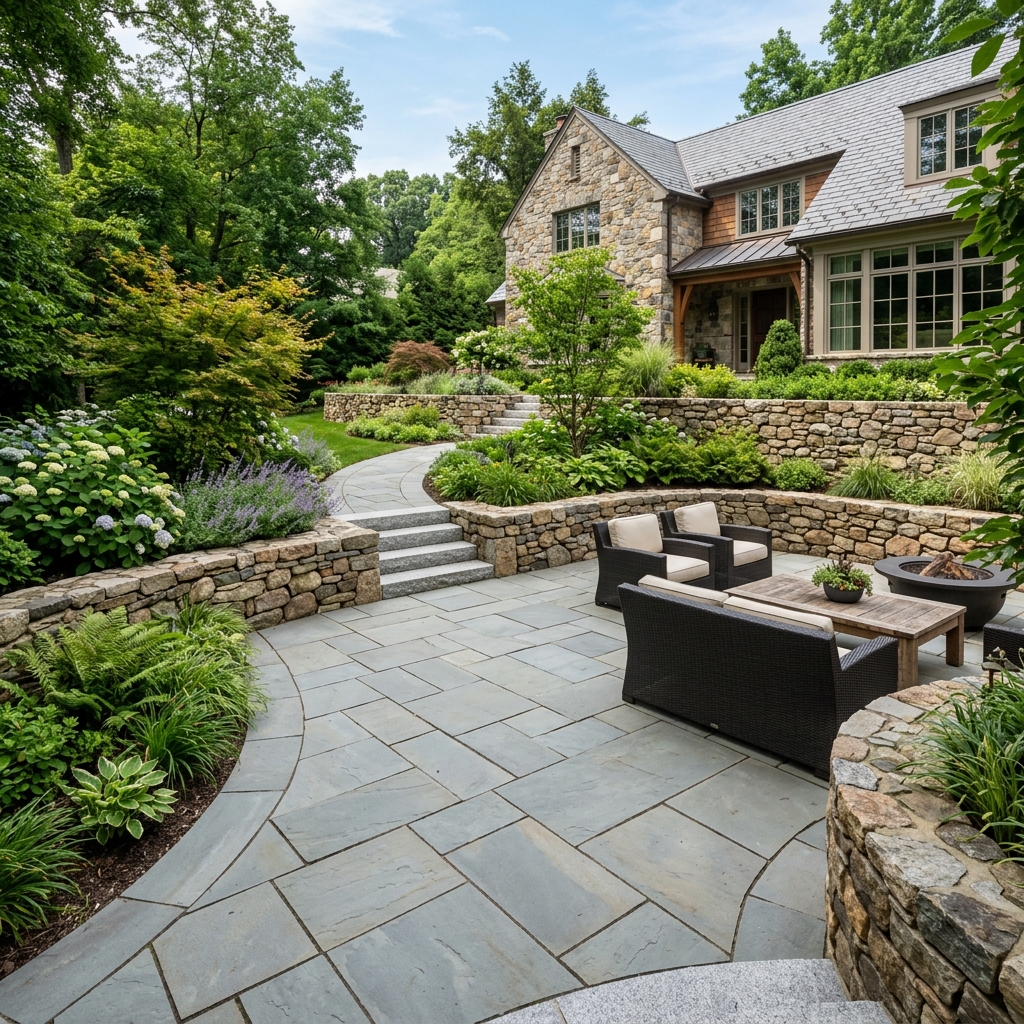
Why Retaining Walls Fail in South Central Texas (And How We Prevent It)
Drive through sloped neighborhoods in North San Antonio, Helotes, Boerne, or Canyon Lake after a heavy rainstorm, and you will see leaning or bulging retaining walls. In almost every case, the failure was caused by hydrostatic water pressure—not the stone itself.
When clay-heavy soil behind a wall absorbs rainwater, it expands and exerts thousands of pounds of lateral force. If water has nowhere to escape, even thick limestone blocks will eventually tip forward.
The 4 Pillars of an Engineered JRM Retaining Wall
With 35+ years of structural and hardscape experience, Robert Thompson insists on four non-negotiable construction steps for every retaining wall we build:
- 1. Below-Grade Trench Footing: We excavate a level trench below grade and install a compacted crushed limestone or steel-reinforced concrete footing so the bottom course cannot slide.
- 2. Perforated French Drain & Washed Gravel Backfill: Directly behind the wall, we install a minimum 12-inch column of washed angular #57 drainage gravel and a perforated PVC drain pipe wrapped in non-woven geotextile filter fabric.
- 3. Geogrid Soil Reinforcement: On taller walls or surcharged slopes, we embed structural geogrid mesh layers back into the compacted backfill to lock the soil mass and wall together.
- 4. Weep Outlets & Cap Masonry: We provide daylight outlets every 15–20 feet and mortared flagstone or chopped limestone caps for a clean architectural finish.
Comparing Retaining Wall Materials & Costs in San Antonio
Depending on wall height, site access, and excavation conditions, retaining walls in the San Antonio area generally range from $45 to $95+ per square foot of wall face.
Dry-stacked or mortared Texas limestone blocks offer a timeless Hill Country look, while structural segmental retaining wall (SRW) blocks and poured-in-place reinforced concrete walls with stone veneer are ideal for high-load structural terracing.