
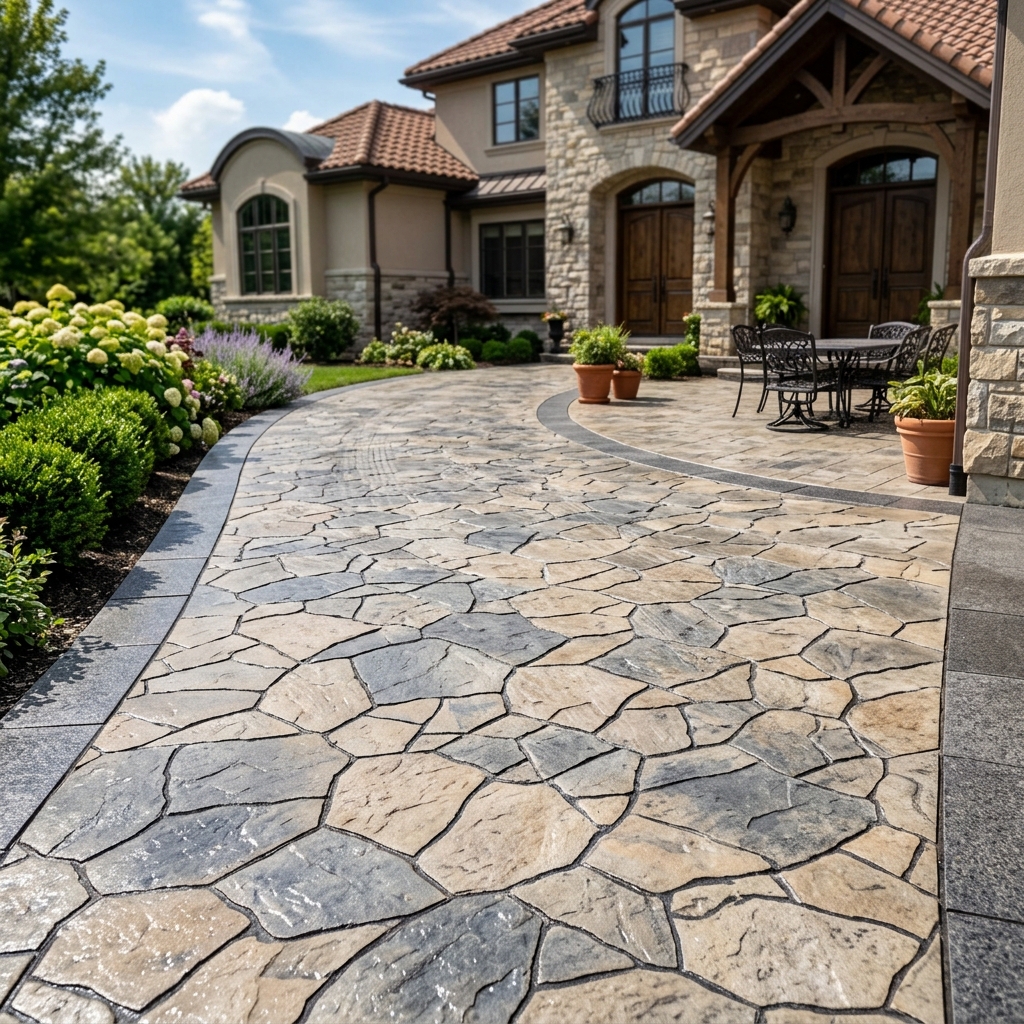
How San Antonio Soil Impacts Your Patio Choice
Choosing between stamped concrete and interlocking pavers (or natural flagstone) in South Central Texas comes down to three variables: upfront budget, aesthetic preference, and how your property's soil behaves during wet-and-dry seasonal cycles.
In areas with high-plasticity blackland clay (such as New Braunfels, Seguin, Schertz, and South/West San Antonio), the ground expands significantly when wet and contracts during summer droughts.
Side-by-Side Comparison: Stamped Concrete vs. Pavers
Stamped Concrete ($14 – $22 per sq. ft.): Poured as a continuous 4-inch steel-reinforced concrete slab, colored with integral pigments, and stamped with Ashlar slate, flagstone, or wood-plank textures before curing.
Interlocking Pavers & Mortared Flagstone ($20 – $34+ per sq. ft.): Individual concrete, travertine, or natural Texas/Oklahoma flagstone units installed over a compacted aggregate base or reinforced concrete sub-slab.
- Upfront Cost: Stamped concrete is typically 25% to 35% more economical per square foot than natural stone or travertine pavers.
- Weed & Ant Resistance: Because stamped concrete is a single monolithic slab, weeds and fire ants cannot push up between joints.
- Flex & Repairability: Interlocking pavers flex slightly with soil movement without cracking, and individual stones can be lifted if underground plumbing ever needs access.
- Heat Reflection: Light-colored travertine pavers stay cooler underfoot around swimming pools, while stamped concrete benefits from lighter earth-tone stains and non-slip sealer additives.
When to Choose a Stamped Concrete Overlay Instead of Demolition
If your existing San Antonio patio slab is structurally sound (no major heaving or settling) but looks gray, stained, or dated, we can apply a polymer-modified stamped concrete overlay. At 1/4-inch to 3/8-inch thickness, an overlay bonds chemically to your existing slab and delivers the look of hand-laid stone without the cost of jackhammer demolition.